What is Caste?
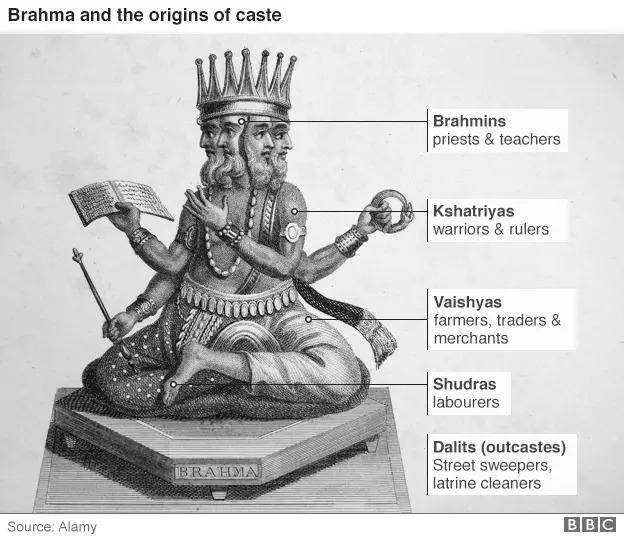
There are different theories regarding the origin of the caste system in India. The religious theory claims that the Varnas were created from the body of the Brahma, the creator of the world. The Brahmanas were created from his naval; the Kshatriyas from his hands; the Vaishyas from his thighs and the Sudras from his feet.
Caste is a social system that divides people into hierarchical groups based on birth, occupation, or social status. It is most commonly associated with South Asia, especially India, where it has deep historical and cultural roots. The system traditionally categorizes people into four main groups or "varnas": Brahmins (priests and scholars), Kshatriyas (warriors and rulers), Vaishyas (merchants and landowners), and Shudras (laborers and service providers). Outside of these four varnas are the Dalits, historically referred to as "Untouchables," who were marginalized and subjected to severe discrimination.
The caste system is closely tied to social, economic, and political inequalities. Those in higher castes, especially Brahmins, have historically enjoyed privileges and power, while those in lower castes, particularly Dalits, have faced exclusion and oppression. Although caste-based discrimination is illegal in countries like India, its effects continue to influence social interactions, opportunities, and status. Caste remains a deeply ingrained, often invisible force that shapes people's lives, identities, and relationships in society.
Why Casteism is Bad:
-
Discrimination and Inequality: Casteism perpetuates inequality. People born into lower castes are often denied opportunities in education, employment, and basic rights. Their potential is often overlooked, and they are stereotyped as being "inferior." This system makes it difficult for them to break free from poverty and discrimination, trapping generations in a cycle of deprivation.
-
Social Exclusion: Caste-based discrimination leads to exclusion from mainstream society. People from lower castes, particularly Dalits, often face segregation in public places. They might be forced to live in separate areas, denied access to temples, schools, or even wells, and are treated as if they are not part of the larger community. This segregation is not just physical but also psychological, as it reinforces a belief in the superiority of higher castes.
-
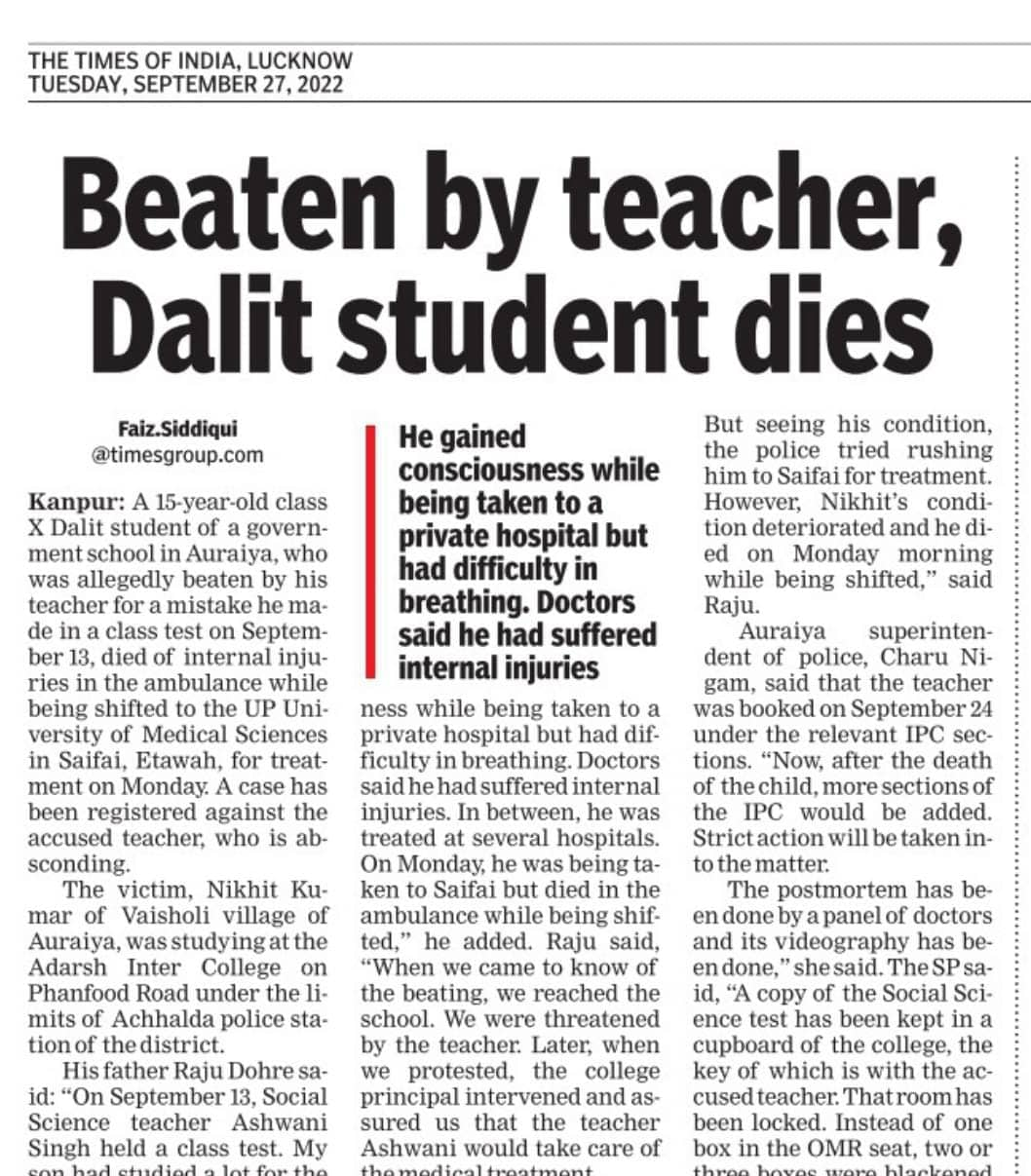
Violence and Oppression: Dalits are frequently subjected to physical violence, sexual assault, and even murder simply because of their caste. Caste-based violence is still rampant, and many of these attacks go unpunished or are not taken seriously by authorities. Dalits are often blamed for their own suffering, with societal attitudes perpetuating their victimization.

-
Cultural Stigmatization: Casteism affects Dalits culturally as well. Their heritage, language, and traditions are often belittled or suppressed. The stigma attached to their identity is so deep-rooted that many Dalits are made to feel ashamed of who they are. This cultural oppression harms their sense of self-worth and pride.
How Dalits Are Oppressed:
-
Economic Exploitation: Dalits often work in the most menial and dangerous jobs, such as manual scavenging (cleaning human waste) or working in agriculture under exploitative conditions. These jobs are seen as "unclean" by upper castes, and Dalits are forced into them due to their social status. Their labor is undervalued, and they are often paid poorly or not at all.
-
Educational Barriers: Access to education is limited for Dalits. Many Dalit children face discrimination in schools, where teachers and classmates might treat them as inferior. They may also lack access to quality educational facilities in their communities. As a result, Dalit children are often forced to drop out of school at a young age, leading to lower literacy rates and limited career prospects.
-
Untouchability Practices: Despite being officially outlawed in countries like India, untouchability still exists in many areas. Dalits are often denied the basic dignity of touch, being considered "impure." They are not allowed to share water, sit on the same benches, or even touch objects that belong to people from higher castes. These practices humiliate Dalits and reinforce the idea of their inferiority.
-
Discrimination in Marriage and Social Life: Marriage between Dalits and people from higher castes is often frowned upon, and Dalits are generally expected to marry within their own caste. This social pressure keeps caste divisions alive and restricts individuals from forming relationships based on love, respect, or compatibility.
-
Access to Justice: Dalits face barriers when it comes to accessing justice. Many victims of caste-based violence are reluctant to report crimes because they fear that the authorities will not take their complaints seriously, or worse, that they will be further victimized. Even when cases are reported, the justice system is often slow, and perpetrators from higher castes are rarely held accountable for their actions.