Browse Items (15 total)
Sort by:
-

200 Negro and White Students Participate in Nashville Demonstrations
Article from the Swarthmore Phoenix published on December 4, 1962 covering the organization of a civil rights demonstration in Nashville, Tennessee by Black and white students who were participants at a conference on behalf of the Student Non-Violent Coordinating Committee. The demonstration brought attention to institutions who discriminated against Black people, including the Nashville YMCA, a couple of cafeterias, and four restaurants. The article mentions that none of the aforementioned institutions fulfilled the demands of the demonstrators. Also mentioned is the presence of a crowd gathered to watch the demonstration, as well as the Nashville police. -

Collect $150 to Aid SNCC
Article from the Swarthmore Phoenix published on November 9, 1962 reports on a drive for the Student Non-violent Coordinating Committee (SNCC) done on election day by Swarthmore students. The fundraising event was for the benefit of SNCC's voter registration campaign in the South, aimed at addressing the suppression of voting rights for Black people. Reactions from the voters are described, and sponsors of the drive and endorsements from politicians are listed. -

Eastern Shore Area Civil Rights Target
Article from the Swarthmore Phoenix published on October 2, 1962 which is the second in a series on the Summer 1962 civil rights projects, this one focusing on rural Maryland. Tom Kennedy, a Swarthmore student, discloses his involvement in the Eastern Shore project in Cambridge, Maryland. The article discusses Kennedy's experience, including reflections on the formation of the Cambridge Nonviolent Action Committee (CNAC).Tags 1962, Baltimore MD, Boycotts, Cambridge MD, Cambridge Nonviolent Action Committee, Chestertown MD, Civil Interest Group of Baltimore, Civil rights movement, Desegregation, Eastern Shore Civil Rights Project, Easton MD, Freedom Riders, Mimi Feingold, Northern Student Movement, Student Nonviolent Coordinating Committee, Thomas Kennedy -

Gretchen Hillard Oral History Transcript
Edited transcript of oral history recorded 2017-12-01 of Gretchen Hillard, interviewed by Stephanie Ramsay, Roberto Vargas, and Eleanor Naiman.Tags Arrest/Jail, Atlantic City Democratic National Convention, Black Power Movement, Cambridge MD, Cambridge Residents Survey Report, Campus Backlash, Carl Wittman, Dizzyland Restaurant Sit-In, Frank Cochran, Gloria Richardson, Gretchen Hillard, John Lewis, Mimi Feingold, Mississippi Freedom Democratic Party, NAACP, oral history transcript, Peace Corps, Philadelphia Society of Friends, Picketing, Quakers, SNCC Mississippi Campaign, Student Nonviolent Coordinating Committee, Sunflower County, Swarthmore Political Action Club, Tenants Organizing, Tracy Sugarman, Volunteering in Chester, Volunteers in Service to America, Voter registration -

John Bennett Oral History Transcript
Edited transcript of oral history recorded 2017-09-12 of John Bennett, interviewed by Stefanie Ramsay, Roberto, Vargas, and Eleanor Naiman.Tags Arrest/Jail, Ashton House, Cambridge MD, Cambridge Nonviolent Action Committee, Dorchester County, Frank Cochran, Gloria Richardson, John Bennett, Mary Lyons, Multiracial Organizing, NAACP Chester, Nonviolence, oral history transcript, Quakers, Student Nonviolent Coordinating Committee, Students for a Democratic Society, Swarthmore Political Action Club -
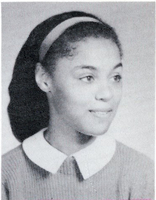
Judy Richardson
Oral History created as part of the Swarthmore Libraries project Swarthmore Student Activism: Civil Rights, 1960 – 1966. Judy Richardson, being interviewed by Stefanie Ramsay and Eleanor Naiman. 2-part audio with transcription, length 2:26:18 -

Penny Patch Oral History Transcript
Edited transcript of oral history recorded 2017-12-19 of Penny Patch, interviewed by Stephanie Ramsay, Roberto Vargas, and Eleanor Naiman.Tags Cambridge MD, Charles Sherrod, Charlotte Phillips, Congress for Racial Equality, Council of Federated Organizations, Dorothy Earley, Eastern Shore Civil Rights Project, Georgia, Judy Walenta, Mimi Feingold, Mississippi Summer Project, NAACP Chester, NAACP Youth Council, oral history transcript, Penny Patch, Student Nonviolent Coordinating Committee, Students for a Democratic Society, Swarthmore Political Action Club -

SNCC
Article from the Swarthmore Phoenix published on October 9, 1962 announcing that the Student Non-violent Coordinating Committee (SNCC) will resume their fundraiser following the lifting of legal roadblocks. Details of the week-long fundraiser are disclosed. -

SNCC
Article from the Swarthmore Phoenix published on November 2, 1962 reports about the upcoming election day demonstration by the Student Non-violent Coordinating Committee (SNCC). The sponsors of the demonstration are listed, and plans to spread information and collect donations are disclosed. SNCC expresses a need for funds to continue its voter registration campaign for Black people in the South in efforts to combat the suppression of voting rights, citing a statistic by the U.S. Civil Rights Commission. -

SNCC Expand Direct Action
Article from the Swarthmore Phoenix, published on November 30, 1962, reports about the three day conference in Nashville, Tennessee with over 200 members of the Student Non-Violent Coordinating Committee (SNCC). Members provide reports about their voter registration projects, particularly in the areas of southwest Georgia and the delta area of Mississippi.
They discuss recent injunctions issued against civil rights actions that harass the movement and deliberate over whether they should violate the injunction or not; most are in favor of violation, comparing the injunctions to other unjust laws. SNCC staff Bob Zellner advocates for policy regarding "subversives" and the acceptance of aid and support from those regardless of political affiliation. This issue, along with that regarding the injunctions, is set to be discussed at the next SNCC executive meeting.
Comments by Reverend Slater King from Albany, Georgia are disclosed including his goals of the civil rights movement. At the end of the conference, the closing address by executive director Charles McDew is reported to have emphasized the civil right's movement ultimate concern with justice, freedom, and equality-- not just integration.